Museum QR Code Generator for Exhibits, Audio Tours & Maps
Create museum QR codes for exhibit guides, audio tours, maps, ticket pages, donation pages, event info, videos, and feedback forms. Use them on labels, signs, tickets, and galleries.
Free QR code generator
Create a QR code online
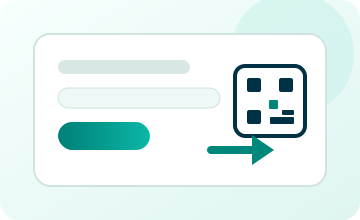
Generate QR codes for websites, email, phone numbers, vCards, Wi-Fi, plain text, forms, PDF files, and campaign links. Customize colors, add a logo or frame, then download a print-ready PNG or SVG.
Choose QR code type
Website QR code, Email QR code, Phone QR code, vCard QR code, Wi-Fi QR code, Text QR code, SMS, WhatsApp, event, and download links.
Add your content
Enter your website URL, contact details, message, phone number, location, or file destination before generating the QR code.
Customize and download
Adjust QR colors, error correction, logo, frame, size, and margin. Generate QR Code, Download PNG, Download SVG, or Save and track scans.
Visitor context
Add depth to exhibits without crowding the printed label
A museum QR code is useful when a visitor needs more context than a small label or wall sign can provide. It can open an exhibit guide, audio tour, gallery map, ticket page, donation page, event listing, video, classroom resource, accessibility note, archive record, or visitor feedback form. Museums, galleries, cultural venues, visitor centers, curators, education teams, and event staff can use QR codes to connect a physical visit with a richer digital layer.
The strongest museum QR codes respect the visitor's moment. A code beside an artwork can open a short audio story or conservation note. A code near an entrance can open the map. A code on a school worksheet can open learning resources. A code near the exit can open feedback or donations. QR Code Lab helps make these links printable, updateable, and measurable so staff can see which signs and exhibits actually invite scans.
QR Code Lab creates URL QR codes. It does not sell tickets, process donations, host collection systems, manage maps, collect visitor data, or run museum apps. The destination should be the page, guide, form, or platform your venue already trusts.
Schools, classrooms, workbooks, and textbooks
Connect museum visitors to the story behind the exhibit
Learning accessA museum QR code should add useful layers to the physical visit: audio guide, object label, map, transcript, translation, collection record, family activity, accessibility note, event page, or post-visit resource.

Open object and exhibit details
Use QR codes beside labels, cases, rooms, and gallery panels to open collection records, artist notes, provenance, dates, materials, images, and related objects.
Offer audio, video, and translations
A mobile destination can carry audio guides, captions, sign-language video, translations, large-print text, and sensory notes without crowding the wall label.

Guide visitors through the building
Use QR codes on maps, room entrances, ticket desks, and exhibit starts to explain routes, floors, facilities, accessibility, and timed-entry details.

Support families and school groups
Link to scavenger hunts, worksheets, teacher guides, child-friendly notes, activity prompts, and post-visit learning resources.
Keep changing exhibits current
Dynamic QR helps when object rotations, room closures, event pages, tour schedules, and collection links change after signs are printed.

Collect feedback at the right moment
Use exit signs, event handouts, or exhibit endings to ask for visitor feedback, membership interest, donations, or program signup.

Extend the visit after leaving
Posters, tickets, and shop inserts can point to recordings, reading lists, membership, upcoming events, or exhibition archives.

Make staff help easier to find
Add contact, accessibility, lost-and-found, membership desk, group visit, or visitor services links when the QR belongs to practical wayfinding.
Visitors should get the layer promised by the label
The scan should open the exact object, room, tour, audio, map, translation, or activity connected to the printed prompt in front of them.
Museum teams can update digital interpretation without replacing every sign
Dynamic QR is useful when exhibit text, audio guides, room routes, education materials, events, or collection records change during a show.
Put the QR beside the museum moment
Museum placement
Place museum QR codes where visitors want more context
PlacementMuseum QR placement should respect visitor attention. Put codes where people pause, read, compare, ask for audio, need a map, or finish an exhibit with a clear next step.
The QR competes with the exhibit instead of supporting it
A QR code placed without a clear promise can pull visitors away from the object without giving them a useful reason.
Museum scans should deepen the visit, not turn every label into a generic website link.
The QR adds the next layer of understanding
Use object labels for collection records, entrances for tours, maps for navigation, and exits for feedback or membership.
The caption should tell visitors what extra layer opens before they scan.
What does the visitor want here?
Audio, translation, object record, map, activity, ticket help, event details, or feedback should determine the destination.
Will phones disrupt the room?
Place QR codes where scanning will not block traffic, crowd a case, or distract from a quiet gallery.
Does accessibility need its own path?
Audio, captions, large-print text, translations, and sensory notes may deserve clear labels.
Will the exhibit change?
Use dynamic QR when object lists, room routes, event links, or educational resources may move.
Object label or case
Open collection records, audio guides, translations, captions, provenance, and related works.
Gallery entrance
Introduce the theme, map, route, family activity, or accessibility notes before visitors begin.
Education handout
Link students, teachers, and families to worksheets, activities, sources, and post-visit resources.
Exit or shop area
Use for feedback, membership, donations, exhibit archive, reading list, and upcoming events.
Poster or event sign
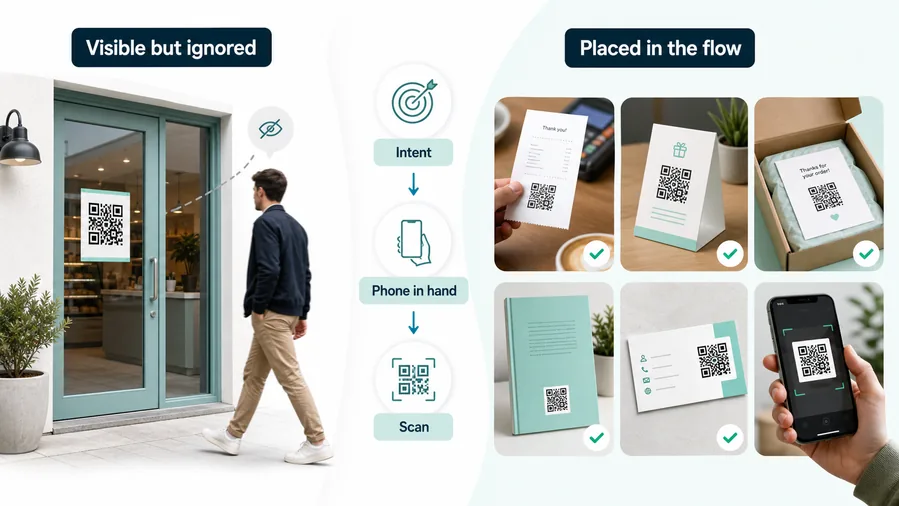
Best where people pause: registration line, booth, waiting area, seat back, schedule board, or exit path. Weak when people only pass at speed.
Business card
Useful after a conversation because the person already knows why they might save a contact, open a portfolio, book a call, or follow up.
Window sign
Good for after-hours menus, booking, pickup instructions, or quick offers. Avoid complex actions when the person is outside and just walking by.
Cover or front label
Use it only when the promise is immediate and clear. Otherwise the better scan moment is often inside the material or after the first interaction.
Museum QR placement should deepen the visit
Use the code where it adds context, access, or action that the physical label cannot comfortably carry.
Exhibit update control
Use dynamic QR when museum content changes during a show
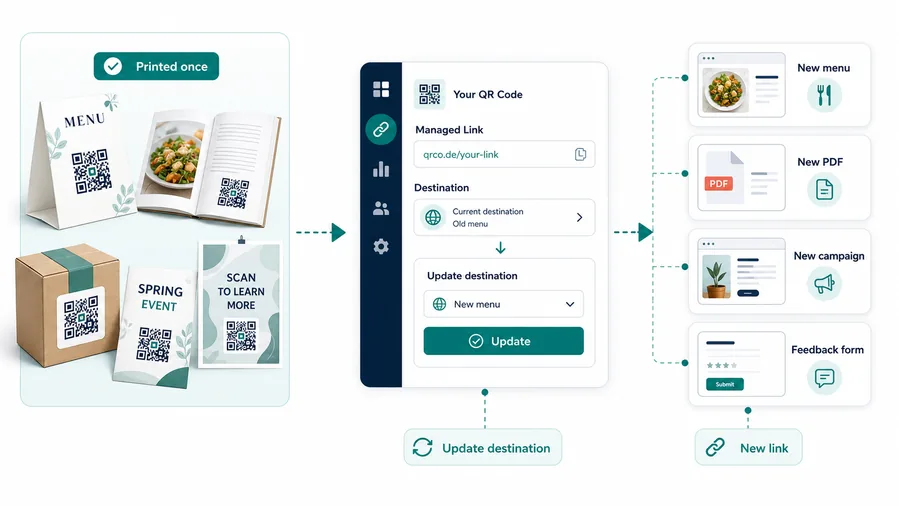
DynamicMuseum signs, labels, maps, and handouts can stay in place while object rotations, room closures, event pages, audio guides, translations, and education materials change behind the QR destination.
Printed labels can outlive the current interpretation
Object records, event pages, audio files, route maps, and accessibility notes can change while printed exhibit materials remain in the gallery.
A static destination may send visitors to outdated information or a page that no longer matches the room.
The same gallery QR can open the current layer
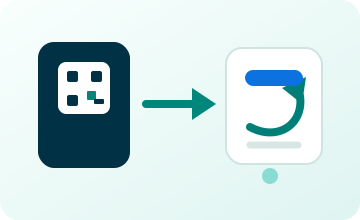
Dynamic QR lets museum teams update the destination without replacing labels, posters, maps, or education sheets.
That supports rotating exhibits, temporary closures, new translations, added media, and post-exhibit archives.
Object and exhibit updates
Update collection records, room notes, object rotations, corrections, and related works.
Audio and accessibility
Change audio guides, transcripts, captions, translations, large-print pages, and sensory notes.
Tours and wayfinding
Update maps, routes, room closures, timed entry, facilities, and visitor service notes.
Programs and follow-up
Move scans to event pages, school resources, feedback, donations, membership, and exhibit archives.
Use dynamic when interpretation needs room to evolve
If exhibit materials will stay printed while digital layers change, an editable QR destination protects the visitor experience.
Exhibit flow
Place codes where the visitor is ready for the next layer
Museum placement is not only a design question. A code must be close enough to the object, room, or sign that it feels connected, but not so close that visitors block the view while scanning. Exhibit labels, room signs, printed maps, ticket counters, event posters, school worksheets, donor walls, audio tour cards, gift shop displays, and exit-area feedback signs can all work when the next step is clear.
Use calls to action such as hear the story, open the gallery map, watch the restoration video, book the tour, view classroom resources, donate, or leave feedback. Dynamic QR codes help because exhibits rotate, event pages change, and educational materials are updated. QR Code Lab analytics can show which rooms, displays, and printed guides lead visitors into the digital layer. That can help teams improve signage and visitor flow without guessing from observation alone.
For accessibility, think about height, lighting, and crowding. A code placed too low, too glossy, or too close to a popular object may be technically correct but hard to scan. Test with a normal phone in the actual room before printing many labels. If the exhibit has audio, video, and learning resources, a small landing page can be better than forcing every label to carry a different long explanation.