
QR Code Security for Business - Check QR Assets First
Check business QR codes before publishing or trusting them by decoding images, previewing URLs, inspecting redirects, and reviewing risk signals. Audit menus, signs, packaging, receipts, and support codes.
Business QR trust
Protect customer trust by checking QR codes before and after publishing
QR code security for business is about making sure printed scan points send customers where the business actually intends. A code on a receipt, table tent, payment sign, package, poster, window decal, or invoice can affect trust quickly. If it points to the wrong page, an expired link, or a strange-looking redirect, customers may hesitate or give up.
QR Code Lab helps business teams decode QR images, preview URLs, inspect redirects, and review basic risk signals. That is useful before a print run, during campaign checks, and when auditing QR codes already in the field. A simple report can confirm that the code opens the right final host and that the destination still matches the printed message.
QR Code Lab creates and checks QR code links, but it does not control third-party websites, payment processors, POS systems, or external form tools. The goal is to make the printed access point easier to verify, manage, and measure so customers feel safer scanning it. That matters most when the QR code asks for payment, login, booking, or private details.
Business QR security
Business QR security QR security and inspection teams with decoding, URL preview, redirect checks, risk signals, print testing, and scam inspection
Business safetyUse QR codes to move QR security and inspection teams from suspicious codes, screenshots, printed assets, parking or payment signs, and business materials to decoding, URL preview, redirect checks, risk signals, print testing, and scam inspection before people trust or publish the destination.

Create a controlled path from print to approved destinations
Every customer-facing QR code should have an owner, purpose, destination, printed CTA, and review process. That matters most for payments, logins, support, feedback, loyalty, documents, and forms.
A shared spreadsheet or campaign register is boring, but it prevents expensive confusion later.
Protect public placements from tampering and stale links
QR codes on windows, counters, tables, parking signs, invoices, receipts, packages, and posters should be checked for sticker replacement, damage, outdated campaigns, broken redirects, and destinations that no longer match the printed promise.
Public QR assets need maintenance, not just launch approval.
Make legitimate QR codes easy for customers to trust
Customers are more willing to scan when the code sits beside a clear brand, plain-language CTA, expected domain, first-screen match, and visible support path. Security and conversion are connected.
A trusted QR code explains itself before and after the scan.Business QR security should be a workflow, not a one-time scan test
The risk is not only a malicious QR. It is also the wrong destination, stale redirect, expired campaign, unclear payment page, missing owner, damaged sticker, or public code nobody audits after launch.
Treat customer-facing QR codes as live assets with owners, review dates, and approved destinations.Destination ownership
Assign who owns each QR, destination, printed CTA, and fallback path.
Approved domains
Use recognizable domains and providers for payment, login, forms, support, and files.
Placement audits
Check public signs, tables, receipts, packaging, counters, and posters for tampering or damage.
Change control
Review redirects, campaign changes, expired offers, and provider migrations before customers scan.
Business controls
Build QR security around ownership, approved links, public checks, and customer trust
TrustA business QR code becomes a public promise. The company should know who owns it, where it points, why it exists, when it was last checked, and what customer action it asks for.

No owner for customer-facing codes
If nobody owns a QR code after launch, stale destinations, broken redirects, and outdated offers can stay public for months.
Watch for similar-looking domains, long URLs, login or verify keywords, and pages asking for credentials after an unexpected scan.
Sensitive actions on unclear pages
Payment, login, support, booking, and personal-data forms need recognizable domains, brand continuity, and visible help paths.
A trustworthy QR should not make the final destination mysterious, especially on posters, labels, menus, parking signs, or event materials.
Public tampering and replacement
Stickers and printed codes on customer surfaces can be damaged, covered, or replaced, especially in busy public locations.
Before paying, check the domain, HTTPS, amount, recipient, and whether the destination matches the place or brand that printed the QR.Review business QR assets before and after launch
Check the decoded URL, redirect path, final domain, first screen, printed CTA, owner, placement, and requested action before customers rely on the code.
A QR code that was correct on launch day can become unsafe or misleading when destinations, campaigns, or public placements change.Owner and purpose
Record who owns the QR code, what action it supports, and where it is printed.
Approved destination
Verify domains, providers, redirects, and fallback pages for payment, forms, files, and support.
Physical placement
Inspect public labels, signs, tables, counters, invoices, receipts, and packaging for tampering.
Review cadence
Recheck QR codes after campaigns, menu changes, payment-provider migrations, and redesigns.
Publish QR codes customers can recognize and verify
The printed CTA, brand, destination, first screen, and support path should all reinforce the same action.
Business scan QA
Test the customer scan path before a QR code becomes public business infrastructure
Scan UXBusiness QR security includes the customer experience: the scan should load the expected page, show the right brand, request the right action, and make support visible when money or personal data is involved.
Test the printed proof, not only the design file
Poster, receipt, table card, invoiceScan the actual printed size, material, and placement under realistic lighting and distance.
Confirm the first screen matches the printed CTA and expected brand.
Audit public placements and redirects
Sticker, sign, counter, campaignCheck that codes have not been covered, damaged, replaced, or left pointing to expired offers and old providers.
Redirects and dynamic destinations should be reviewed when campaigns change.
Use stronger checks for payment, login, and data collection
Checkout, forms, accounts, filesCustomers need recognizable domains, clear purpose, support, and confirmation when the QR asks for money or information.
Do not bury trust signals behind a generic landing page.
Does the QR open the approved destination?
Compare decoded URL, redirect path, final domain, and first screen with the QR asset register.
Does the printed CTA match the page action?
The words beside the code should match what the mobile page asks the customer to do.
Is there a support or fallback path?
Payment, booking, login, and personal-data flows should show how customers can get help.
Business QR security is customer trust in operational form
A secure business QR code is owned, reviewable, recognizable, and aligned with the action customers expect.



Print asset review
Check business QR codes like any other customer-facing asset
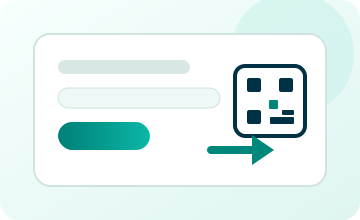
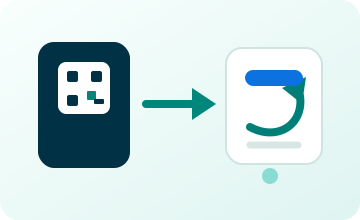
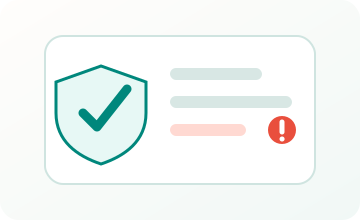
Useful review points include payment signs, menu QR codes, package labels, invoices, direct mail, event signs, classroom materials, parking signs, stickers, and storefront decals. Check the QR before printing, after installation, and whenever the destination changes. Confirm the domain, redirect path, final page, mobile layout, and visible business name.
Dynamic QR codes can improve security operations because you can update a destination without replacing every printed item. That helps when a page moves, a campaign ends, or a vendor changes. Scan analytics can also show whether a code is still being used in the field, which helps decide which printed assets need review first.
Make QR destinations look trustworthy. Use branded pages when possible, avoid vague short links on payment or login flows, and keep CTAs clear. QR Code Lab can help manage the QR path and scan reporting, while your business systems remain responsible for payments, forms, orders, and customer records. A clear destination protects both conversion and confidence, because customers are more likely to continue when the page matches the sign.